Vintage Action Man (1966 to 1983) Torso Dates, Mold Numbers, Slotted Parts and Painted Rivets explained
Firstly let me point out that all Action Man Torso’s produced from 1966 to 1978 were stamped “Made in England by Palitoy under licence from Hasbro © 1964” on the lower back. This does not mean that your Action Man is from 1964 as some might think, in fact they are at least two years older than that as they were only introduced to the UK market at the end of January 1966, and it wasn’t until March of that year that we actually saw them appearing on the shop shelves. (check out our launch of Action Man article here)

The same applies to the Blue Pants Torso’s from 1978 to 1983 these were all stamped “© CPC Products Corporation 1978” on the lower back irrespective of the year they were produced.
The Front Buckle on the Blue Pants torso has the word “Action Man” embossed on it. The Action Team Torso has “AT” embossed on it

SLOTTED SHOULDERS
Vintage Action Men have straight cut-outs at the neck and shoulders so the hooks and elastic that join the arms and head to the torso can easily be attached. But did you know that the earlier runs of GI Joe figures had what is known as “Slotted” necks and shoulders.
The purpose of the extra hole or slot was to make the attaching of the parts easier.
These GI Joes are much sought after by collectors and we are fortunate enough to have one of these little gems in our collection.

RIVETS
Early issues of Action Man (1966 to 1969) were produced using rivets on the joints that were painted pink to match the skin colour of the figure, the later issues had plain silver coloured rivets.
These rivets are prone to rusting and we see many figures with rivets so discoloured that it’s often hard to tell if they were originally painted or not. Sometimes you can see remnants of paint on the bottom of the rivet which can help you age your figure.
It is worth pointing out that some early GI Joe’s from 1964 had brass plated rivets on many of the parts as the factory had run out of the painted ones.

LIMB NUMBERS AND MOLD INJECTION MARKS
The earlier Action Men (1966 to 1978) had 20 individual parts and each part could be moved to create your own exciting adventure, Many of these parts were handed for the left or right side of the body, the Shoulders, Biceps, Thighs and of course the hands and the feet.
Many of these parts were marked ‘L’ or ‘R’ and some of them also had numbers on them, for example ‘5L’ or ‘7R’, but what do these numbers actually mean?
Well its all down to quality control as these mold numbers were the manufacturers way of tracking the quality of each batch of parts that were made prior to them being sent to Palitoy for assembly.

MOLD INJECTION MARKS
The first castings had no numbers on them, but many of these earlier castings did have some very distinctive “Mold Injection” marks on them (this was the part of the limb that the plastic was injected into). On later limbs (c1970’s) the injection marks appear as a circular indent and some parts using these later molds do not have any letters or mold numbers on them.

MOLD NUMBERS
The letters and numbers on the limbs of your Action Man are what are known as “Mold Numbers” and as stated earlier were used for quality control. These mold numbers can help us age our figures for example a simple ‘L’ or ‘R’ on the limbs would indicate that these were from the earlier molds, on later molds a number was added 4L, 5R etc, I have seen parts numbered up to 15 on some vintage Gi Joe figures.


Parts without numbers or letters can easily be identified by the “Mold Marks” and “Rivet” types when trying to ascertain if they are Vintage, 40th or Repro parts.

Check out some of the Action Man figures and accessories we currently have in stock
All Prices Include UK Postage
-
 40th Anniversary Argyll & Sutherland Highlanders£160.00
 -
 SAS Boxed 40th Anniversary Key Figure£130.00
 -
 40th Anniversary Action Man Olympic Champion Set£85.00
 -
 40th Anniversary Olympic Champion Set£85.00
 -
 40th Anniversary Action Man Cricketer Set£85.00
 -
 40th Anniversary Explorer Sledge And Dog Team£85.00
 -
 Action Man French Foreign Legion£160.00
 -
 Action Team Smoke Jumper Firefighter£180.00
 -
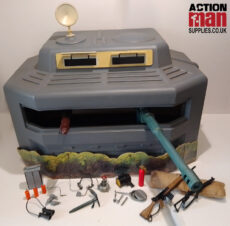 Boxed Electronic Command Centre£350.00
 -
 Space Ranger Talking Commander£265.00
 -
 Crash Crew Fire Fighter£110.00
